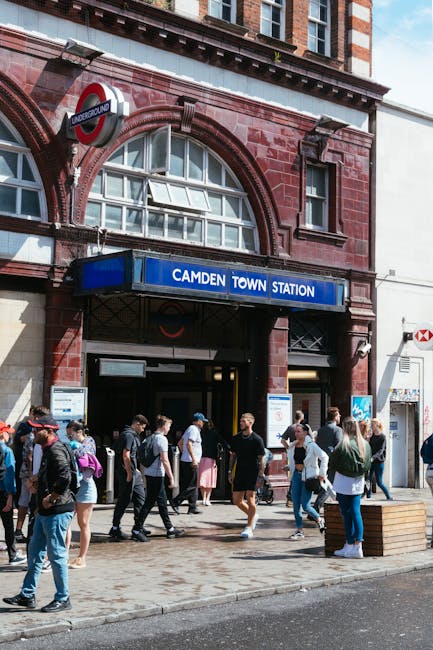
Moving Near Canning Town Station? Leamouth Access Tips
If you are moving near Canning Town Station, the Leamouth side of the journey can feel a bit fiddly at first. Busy roads, tight windows for loading, flats with limited access, and the usual London mix of pedestrians, buses, and surprise roadworks can all slow things down. The good news? With a bit of planning, moving near Canning Town Station and around Leamouth becomes far more manageable. This guide pulls together practical access tips, local moving advice, and a few real-world checks that can save you time, stress, and a couple of avoidable headaches.
Whether you are heading into a riverside apartment, a shared flat, or a family home near the station, the key is to think about access before the van turns up. That sounds obvious, but let's face it, people often only realise the problem when a sofa is stuck in the hallway. Below, you will find a clear breakdown of what matters, how to prepare, and which services can make the move smoother.
Why Moving Near Canning Town Station? Leamouth Access Tips Matters
Access is one of those moving-day details that seems small right up until it becomes the biggest issue on the day. Near Canning Town Station and across Leamouth, the pattern is familiar: busy transport corridors, mixed residential and commercial streets, limited waiting space, and buildings that are not always designed with easy van access in mind. If your movers cannot park close enough, every box takes longer. If the lift is small or the entrance is awkward, furniture handling becomes slower and riskier. That is the reality.
For local moves, the difference between a calm day and a messy one often comes down to access planning. A straight route from van to front door can shave significant time off the job. A poor route can create a chain reaction: delayed unloading, tired lifting, blocked pavement access, and more chance of knocks or damage. In our experience, a move can look straightforward on paper and still turn awkward because of a narrow entrance or a loading bay that is already occupied.
There is also the broader local context. Leamouth has a mix of newer developments and older streets, so access conditions can vary a lot from one property to the next. If you are moving into a high-rise block, a riverside apartment, or a townhouse tucked off a busier route, the access plan needs to match the building rather than the postcode alone. That is why good local knowledge matters.
If you are preparing early, it helps to read broader moving advice too, especially on efficient moving tips for a less stressful day and smart decluttering before you move. Less clutter usually means fewer trips, lighter lifts, and a cleaner route through the building. Simple, but true.
How Moving Near Canning Town Station? Leamouth Access Tips Works
The process is really about matching your move to the local environment. Start by mapping the route, then assess where the van can legally and safely stop, then work backwards to your front door. That sequence sounds basic, but it is the bit people skip. When you reverse the thinking, you spot the pinch points earlier.
Here is the practical version. First, confirm the exact address and entrance. Some Leamouth buildings have multiple access points, side entrances, or rear loading areas. Second, look at the street layout and any restrictions. Third, check whether the property has lifts, stairs, concierge rules, time-limited loading, or required booking slots. Fourth, choose the right size vehicle and moving method. A small van and a few well-packed trips may suit some flats, while a larger removal van may be better for bigger house moves or offices.
This is where service selection matters. If you are moving a few items or a modest flat, a man and van in Leamouth can be a practical fit. For a bigger home, consider house removals in Leamouth or a dedicated removal van service. And if you are shifting a smaller property with awkward access, flat removals in Leamouth often make the whole process feel more organised from the start.
One useful way to think about it: access planning is not a luxury add-on. It is part of the move itself. Truth be told, it can decide whether the day feels tidy or chaotic.
Key Benefits and Practical Advantages
Good access planning near Canning Town Station and Leamouth gives you benefits you notice immediately, not just in theory.
- Shorter loading and unloading times: a closer parking spot means fewer steps and fewer stops.
- Lower damage risk: shorter carrying distances reduce the chance of bumping walls, doors, and stair rails.
- Less physical strain: heavy items become safer to move when the route is clear and direct.
- Better timing control: if the building has set move slots, a well-planned arrival avoids last-minute scrambling.
- Reduced neighbour disruption: quieter, quicker handling is always appreciated in shared blocks.
There is another benefit that often gets missed: confidence. When you know where the van is going, who is opening what, and how each item will move, you stop second-guessing every step. That matters more than people think. A move near a station can involve the feeling of constant movement around you anyway, so having one thing that is under control helps.
If you have bulky furniture, the value of good access is even clearer. Services such as furniture removals in Leamouth are especially useful when you need careful handling for wardrobes, tables, or larger shelving. And for items that need more specialist care, like instruments, piano removals in Leamouth can be the safer route than trying to improvise on the day.
Who This Is For and When It Makes Sense
This kind of access planning is useful for a wide range of people, but it becomes especially important in a few situations.
- Flat movers: if you are heading into a block with shared entrances, lifts, or concierge rules.
- Families moving house: when there are more items, more hands, and a longer loading window to manage.
- Students and sharers: if you are moving on a budget and want to avoid extra trips or wasted time. For that, student removals in Leamouth can be a tidy fit.
- Office teams: if equipment, chairs, and desks need careful scheduling. See office removals in Leamouth for more context.
- People moving at short notice: when same-day access decisions become the difference between a smooth and a scrappy move.
It also makes sense if you are already juggling storage, packing, or a move-out deadline. For example, a person clearing a rented flat near Canning Town may need same-day removals in Leamouth plus a final clean and perhaps temporary storage. That is a lot to hold in your head on your own. No shame in getting a proper plan in place.
And if you are still sorting what to keep, what to donate, and what can go, the guide on decluttering before a move is a genuinely useful companion piece.
Step-by-Step Guidance
Here is a simple way to approach a move near Canning Town Station and across Leamouth without overcomplicating it.
- Confirm the property access details. Ask about lifts, stairs, entry codes, concierge booking, loading restrictions, and any reserved parking or bay rules.
- Walk the route from the van to the door. Look for bottlenecks such as tight corners, narrow hallways, low ceilings, and step differences. Even one awkward landing can change the whole plan.
- Measure key furniture and doorways. Sofas, mattresses, wardrobes, and desks are the usual troublemakers. If something barely fits, assume it needs extra care.
- Choose the right packing method. Use sturdy boxes, label by room, and keep essentials separate. Packing and boxes in Leamouth is worth checking if you want a more structured start.
- Decide whether you need extra lifting support. Heavy or awkward items may need specialist help, especially where stairs or long carries are involved. There is a reason people use professional help for items that are simply not pleasant to move alone.
- Plan the arrival window carefully. In busy London areas, timing matters. You want to avoid peak pedestrian flows and any building-specific schedule conflicts.
- Prepare a loading order. Put large and awkward items in first if they are going into the vehicle deepest, then use lighter boxes to stabilise them.
If you are moving from a higher floor, the route can get tiring fast. That is where practical lifting know-how helps. You can read more about safer techniques in solo heavy lifting made simpler and better lifting movement and control. Not glamorous reading, perhaps, but useful when your back starts reminding you it exists.
A small but important point: do not leave parking or lift booking until the morning of the move. That is the sort of thing that turns a manageable day into a long one.
Expert Tips for Better Results
These are the kinds of details that experienced movers pay attention to because they quietly save time and reduce friction.
1. Treat the loading point like a mini worksite
Keep the approach to the van clear. If possible, leave space for trolleys, protect the floor at the property entrance, and make sure the door can stay open safely. Small step, big difference.
2. Move awkward items separately
Mattresses, mirrors, framed art, and flat-pack furniture can become awkward fast if they are mixed in with heavy boxes. Keeping them separate helps avoid the classic "where does this go now?" moment. For bed-specific advice, bed and mattress moving tips are worth a look.
3. Wrap for the route, not just for storage
There is a difference between packaging for storage and packaging for carrying through a building. Corners, lifts, and external weather can all affect the finish of your items. If a sofa is going into storage after the move, you may also want to read how to protect a sofa for longer-term storage.
4. Use the local setup to your advantage
Some Leamouth properties are easier to access early in the day; others are calmer later once commuter traffic eases. Nearby station activity can affect the street rhythm, so think practically about timing rather than assuming any slot will do.
5. Keep a backup plan
If your preferred bay is taken or the lift is unavailable, what then? A second option avoids panic. Sometimes the answer is simple: a short wait, a different entrance, or a smaller shuttle run. Not ideal, but manageable.
For anyone trying to streamline the whole move, this is also where stress-free moving advice and the company's broader services overview can help you decide what to handle yourself and what to hand over.
Common Mistakes to Avoid
Most access problems are predictable. That is the frustrating part. Here are the mistakes that cause the most trouble.
- Assuming the van can park right outside: not always possible, especially near busier roads and station-adjacent streets.
- Ignoring building rules: some properties require advance lift booking or specific moving hours.
- Not checking item sizes: a sofa or bed frame that fits in the property may still be awkward in the corridor or stairwell.
- Packing too late: rushed packing leads to heavier, messier boxes and more breakage risk.
- Skipping insurance and handling checks: if something gets damaged, you will wish you had confirmed the basics earlier.
- Trying to lift more than feels safe: a stubborn item and one tired person is not a smart combination. It rarely ends well.
A classic example: someone books a move for mid-morning, assumes the van will wait, then finds the loading bay already occupied by another vehicle. The whole schedule slips. The fix is usually not dramatic, just annoying. Better to avoid it in the first place.
If you want to reduce the chance of that kind of chain reaction, a planned approach through removal services in Leamouth can provide a cleaner structure than trying to piece together the move at the last minute.
Tools, Resources and Recommendations
You do not need a van full of gadgets, but a few practical tools can make access around Canning Town Station and Leamouth far easier.
- Measuring tape: for doors, lifts, hallways, and large furniture.
- Furniture blankets and straps: ideal for protecting surfaces during tight turns.
- Strong boxes and tape: especially if you are carrying items through multiple floors.
- Dolly or sack truck: useful for heavier boxes, though only where the route is suitable.
- Labels and markers: keep rooms and priority items clearly marked.
- Protective wrap: for mattresses, sofas, and delicate surfaces.
For storage planning, the guide on storage in Leamouth is practical if your new place is not quite ready. And if the move also involves sensitive paperwork, equipment, or mixed household goods, it can help to have a look at removals in Leamouth as a wider service option.
If you are curious about what a fuller service might include, local removal companies in Leamouth can be compared against your own needs. Sometimes the simplest answer is the right one; sometimes it is not. A bit of comparison helps.
Law, Compliance, Standards, or Best Practice
For moving work near Canning Town Station and in Leamouth, the most sensible approach is to follow standard UK moving and transport best practice, plus any property-specific rules. That usually means checking access permissions, respecting parking restrictions, keeping pavements clear where required, and making sure items are handled safely by capable adults.
There may also be building management requirements. Apartment blocks often have their own rules about lift protection, floor coverings, delivery times, and booking procedures. Those are not just "nice to have" details. Ignoring them can delay the move or create avoidable disputes. If you are unsure, ask for written confirmation from the landlord, agent, or concierge team.
Health and safety matters too. Lifting technique, load weight, team coordination, and route clearance all matter on moving day. The company's own health and safety policy and insurance and safety information are useful trust points if you want reassurance before booking. For general transparency, it is also reasonable to review the terms and conditions, especially if your move depends on exact time slots or special handling.
Privacy and payment details matter as well, though they are easy to overlook when you are focused on boxes and parking bays. A quick glance at payment and security and the privacy policy is never wasted time. A boring five minutes now can prevent annoying questions later. Not exciting, but useful.
Options, Methods, or Comparison Table
Different moves near Canning Town Station call for different approaches. Here is a straightforward comparison to help you decide what fits best.
| Approach | Best for | Strengths | Watch-outs |
|---|---|---|---|
| Man and van | Smaller flat moves, student moves, a few larger items | Flexible, practical, often cost-conscious | Less suited to very large households or complex access if poorly planned |
| Full removal service | Households, offices, furniture-heavy moves | More coordination, better for heavier loads and time pressure | May be more than you need for a tiny move |
| Same-day removal | Urgent or late-confirmed moves | Fast response, useful when deadlines are tight | Requires good access info and realistic expectations |
| Storage-first move | When move-in dates do not line up | Helps bridge timing gaps and reduces pressure | Needs an extra handover and clear item labelling |
In a local area like Leamouth, the best option is usually the one that matches your access, your item mix, and your timing. A small move into a flat may be perfectly handled by a man with a van in Leamouth. A larger family relocation may be better served by full house removals. Simple as that.
Case Study or Real-World Example
Picture a typical move near Canning Town Station: a couple relocating from a one-bedroom flat into a newer apartment in Leamouth. The items are not enormous, but the building has a lift booking slot, a narrow entrance lobby, and a loading area shared with other residents. Nothing dramatic, just enough friction to make things annoying if nobody prepares.
They start by measuring the sofa and mattress the day before, then confirm the lift window with building management. They also pack essentials separately so the first night is easy: kettle, bedding, chargers, a couple of mugs, basic toiletries. The van arrives within the agreed slot, the route is kept clear, and the heaviest pieces are taken in before the smaller boxes. No chaos. No guessing. A little bit of patience, a little bit of planning.
One slightly funny moment, if you can call it that: the biggest box turned out to contain books, which is almost always the point where everyone goes, "why did we do this to ourselves?" Still, the move finished on time because the access plan was sensible from the start.
If they had left it to chance, the story would probably have been different. Maybe not a disaster, but definitely longer, louder, and more tiring.
Practical Checklist
Use this checklist the day before or two days before your move. It is intentionally plain, because plain is useful.
- Confirm the full address and exact entrance.
- Check parking or loading restrictions near the property.
- Book lift access or concierge windows if needed.
- Measure large furniture and compare it to doorways and halls.
- Pack and label boxes by room.
- Set aside documents, keys, chargers, and essentials.
- Protect floors, corners, and fragile surfaces where appropriate.
- Choose the right vehicle size and moving support.
- Plan where each item will go in the new property.
- Have a backup plan if the first loading option is blocked.
If you are also dealing with a final clean before handover, the article on move-out cleaning can help you avoid the last-minute panic sweep. And if there are items heading into temporary storage, a bit of forward planning with storage tips for appliances may be useful too, depending on what you are storing.
Expert summary: the smoother the access, the safer and faster the move. Focus on parking, building entry, route width, lifting load, and timing. Get those five things right and the rest of the day usually behaves itself a lot better.
Conclusion
Moving near Canning Town Station does not have to be a headache. With the right Leamouth access tips, you can turn a potentially messy move into something more organised, quicker, and much less physically draining. The trick is to think like a mover before the van arrives: check the route, confirm the parking, measure the awkward items, and choose the moving support that matches the property rather than guessing.
That approach is especially valuable in a busy London pocket where station traffic, building rules, and shared access points can all shape the day. A little preparation goes a long way. Honestly, it is one of those jobs where the boring bits make the biggest difference.
Get a free quote today and see how much you can save.
And if you are still at the planning stage, take your time, tick the access details off one by one, and keep the process calm. A move handled properly has a way of feeling lighter, even before the first box is unloaded.
Frequently Asked Questions
What should I check before moving near Canning Town Station?
Check parking restrictions, loading access, lift bookings, entry codes, and the route from the van to the property. These small checks prevent the most common delays.
Is Leamouth difficult for removals?
It can be, depending on the building and street. Some properties are straightforward, while others have tight entrances, shared loading areas, or time restrictions. Good planning makes it much easier.
Do I need a larger van for a flat move in Leamouth?
Not always. A smaller van may be ideal for a one-bedroom flat or a lighter load, while larger homes or multiple bulky items may need more space. The item mix matters more than the postcode.
How far in advance should I arrange access for the move?
As early as possible. If your building uses lift bookings or has reserved bays, try to confirm them several days ahead. Leaving it until the morning is risky.
What if the loading bay is occupied when the van arrives?
Have a backup plan. That may mean a short wait, a different entry point, or a revised unloading order. Good movers expect this kind of thing and adapt calmly.
Can I move heavy items myself near Canning Town Station?
Some items, yes, but be realistic. Heavy wardrobes, pianos, and awkward appliances are better handled with support. If something feels beyond your comfort level, it probably is.
Are same-day removals available in Leamouth?
They can be a useful option for urgent moves, but they still depend on access being clear enough to work safely and efficiently. Same-day does not mean "no planning needed".
What is the best way to move a sofa through a tight entrance?
Measure the sofa and the doorway first, remove anything that can safely be detached, protect the corners, and plan the angle before lifting. If it still looks awkward, specialist furniture help is sensible.
Should I use storage if my move-in date changes?
Yes, temporary storage can bridge a timing gap and reduce pressure. It is especially useful when you have already moved out but cannot move in straight away.
How do I keep costs under control for a local move?
Declutter before packing, label boxes well, confirm access early, and choose the right service level for the size of your move. Wasted time and extra trips are usually what push costs up.
Do removal teams handle office moves near Canning Town Station?
Yes, office moves are often planned around access windows, equipment handling, and minimal disruption. A clear building schedule makes a big difference.
Where can I find more information about booking and support?
You can start with the pricing and quotes page and the wider about us page if you want to understand the service, process, and support options before booking.