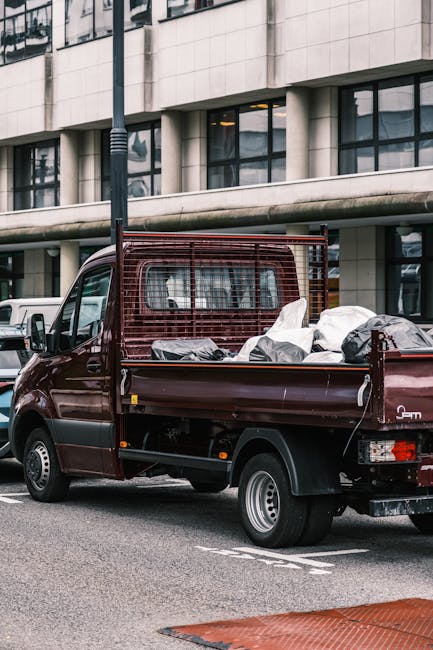
E16 Man with Van Parking Tips for Quick Leamouth Pickups
If you are arranging a quick pickup in Leamouth, parking is rarely the glamorous part of the job, but it is often the bit that decides whether everything runs smoothly or turns into a faff. The right E16 man with van parking tips for quick Leamouth pickups can save minutes, reduce stress, and help avoid that awkward moment when the driver is circling one extra time while you stand on the pavement with a sofa leg in hand. Truth be told, that happens more often than people think.
This guide focuses on practical, local, real-world advice for loading and collecting items fast in and around Leamouth. You will find timing tips, access advice, compliance reminders, and a simple checklist you can actually use. If you are comparing service options as well, it may help to look at the broader man with van service details and the site's pricing and quotes page so you understand how parking and access can affect the final job plan.
Leamouth has its own rhythm: narrow access points, mixed residential blocks, occasional loading pressure, and roads where one badly judged stop can slow everyone down. So, how do you keep a pickup quick without making it risky or costly? Let's break it down properly.
Table of Contents
- Why E16 man with van parking tips for quick Leamouth pickups Matters
- How E16 man with van parking tips for quick Leamouth pickups Works
- Key Benefits and Practical Advantages
- Who This Is For and When It Makes Sense
- Step-by-Step Guidance
- Expert Tips for Better Results
- Common Mistakes to Avoid
- Tools, Resources and Recommendations
- Law, Compliance, Standards, or Best Practice
- Options, Methods, or Comparison Table
- Case Study or Real-World Example
- Practical Checklist
- Conclusion
- Frequently Asked Questions
Why E16 man with van parking tips for quick Leamouth pickups Matters
Parking is not just a convenience issue. In Leamouth, it can affect speed, safety, cost, and even whether a job can be completed in one smooth visit. A van that stops too far from the entrance means longer carry distances, slower loading, and more chance of damage. A van that parks badly can attract complaints, block traffic, or make the driver rush in ways that are simply not sensible.
For pickups, especially smaller removals or furniture collections, the goal is usually to keep the vehicle close enough for fast loading without creating a problem for residents, pedestrians, or other road users. That balance matters even more in E16 because the area has a mix of newer developments, shared access roads, and places where space feels tighter than it looks on a map.
It also matters commercially. A smoother park-and-load plan often means a cleaner quote, fewer delays, and less back-and-forth with the driver. If you are comparing service types, the difference between a standard van collection and a more complex access job can be meaningful. You will notice that many jobs in this area are won or lost on access details, not just on the items themselves.
Practical takeaway: the better your parking plan, the faster the pickup, the easier the loading, and the less likely the job is to drift into unnecessary stress.
How E16 man with van parking tips for quick Leamouth pickups Works
A quick Leamouth pickup usually works best when the parking plan is agreed before the van arrives. That sounds obvious, but in practice people often leave it until the last minute. Then everyone is standing outside, checking space, nudging between bays, and trying to guess whether the driver can stop for five minutes or needs a proper loading area.
The basic process is simple:
- Confirm the exact pickup address and access point.
- Check whether there is on-street parking, a loading bay, a forecourt, or a managed estate space.
- Work out how close the van needs to be to the door or entrance.
- Plan arrival time around traffic, local school runs, bin collections, or busy resident periods.
- Keep the load ready so the van is not waiting while you search for the item in the hallway.
That final point sounds small. It is not. A few extra minutes while someone hunts for keys, wraps a mirror, or clears the stairs can turn a tidy pickup into a slow one. Anyone who has waited beside a van in drizzle while a flat gets "just one more thing" knows the feeling.
In Leamouth, the best approach is usually to match the parking method to the job size. A single-armchair pickup may need only brief roadside stopping. A small flat move may need a proper loading spot, a closer turn-in, or a plan for moving boxes in short bursts. The right setup is usually less about being clever and more about being prepared.
Key Benefits and Practical Advantages
Good parking planning gives you more than convenience. It improves the whole pickup experience.
- Faster turnaround: The van spends less time searching for a stop and more time loading.
- Lower risk of damage: Shorter carry distances reduce bumps, scrapes, and tired handling.
- Better communication: Everyone knows where to meet and how long the stop is likely to take.
- Less disruption: A tidy, controlled stop is less annoying for neighbours and passers-by.
- More accurate quoting: Parking and access are part of the real job, so the quote fits the work more closely.
There is also a quieter benefit: less mental friction. When the driver can park close and the pickup starts cleanly, the whole job feels calmer. You are not watching the clock while wondering whether the van should move. You are just getting the thing done. Nice, simple, done.
If your pickup is part of a bigger move, the same principle applies across the rest of the job too. Pages like removal services and home moves can help you think about how access, lifting, and parking fit into the wider plan.
Who This Is For and When It Makes Sense
This kind of planning is useful for a wide range of people, not just full house movers. In fact, many of the trickiest parking moments come from smaller jobs where people assume it will be easy. Then the van turns up and, well, reality arrives with it.
It makes particular sense for:
- single-item furniture collections
- student or studio flat pickups
- marketplace purchases collected from homes or blocks of flats
- small office or stock transfers
- same-day jobs with a short turnaround
- customers in managed developments with limited roadside space
It is also relevant if you are doing the pickup during busier parts of the day. Early morning can be calmer. Late afternoon can be trickier. Midday often sits somewhere in the middle, but local patterns vary. In Leamouth, one street may be easy and the next may be a puzzle. That is just how it goes.
If you are unsure what type of service fits your job, comparing the general options on man and van, moving van, and man with van removal can be a sensible starting point. The key is not the label; it is whether the vehicle and access plan suit the pickup.
Step-by-Step Guidance
Here is a straightforward way to handle parking for a quick Leamouth pickup without overcomplicating it.
1. Confirm the exact collection point
Ask where the item will be ready: street level, lobby, flat, basement, or rear entrance. "Near the front" is not enough. If the van needs to load from the back of a building, the parking plan changes immediately.
2. Check the parking type before the van sets off
See whether the pickup can use a residential bay, loading area, shared drive, or brief roadside stop. If you are not sure, describe the surroundings clearly to the driver. A quick phone call can save a lot of guesswork.
3. Time the arrival properly
Try to avoid moments when the road is likely to be busy with school traffic, bins, deliveries, or commuter pressure. In Leamouth, ten minutes can matter more than people expect.
4. Prepare the items before the van arrives
Have boxes sealed, handles clear, and fragile pieces wrapped. If the driver arrives and you still need to dismantle a table, the parking bay is being used less efficiently than it should be.
5. Keep the loading route clear
Move prams, bikes, bins, and loose hallway clutter before the van pulls up. That reduces the chance of delays and keeps lifting safer.
6. Decide how long the stop really needs to be
A two-minute pickup and a twenty-minute pickup should not be treated the same. Be honest about time. It helps the driver plan properly and avoids awkward "just one more item" moments.
7. Stay flexible if the first spot is not ideal
Sometimes the closest bay is not the best one. A slightly farther but safer stop can be faster overall if it avoids reversing issues or blocked access. That is one of those practical judgement calls that sounds small until you need it.
And yes, sometimes the best parking tip is simply this: arrive ready. Not glamorous, but very effective.
Expert Tips for Better Results
Here are the details that often separate a decent pickup from a really smooth one.
- Use a clear meeting point: If the driver cannot easily see the property, agree on a landmark such as the main entrance, gate, or corner of the street.
- Think in carry distance, not just parking distance: A van can be "nearby" and still create a long, awkward walk with heavy items.
- Plan for return visits: If the job may need a second trip, choose a parking position that can be re-used without hassle.
- Keep keys and access codes ready: There is nothing like a locked lobby to slow a supposedly quick pickup. Happens all the time.
- Protect the schedule with a buffer: If the building access or parking is uncertain, add a few minutes at the start rather than trying to catch up later.
- Use smaller loads where sensible: For particularly tight access, splitting items into manageable sections can be faster than trying to force one big load through a narrow path.
One small local observation: in areas like Leamouth, the calmest jobs often belong to the customers who think ahead by ten minutes, not ten hours. Just enough planning to prevent silly delays. That's the sweet spot.
If you are also dealing with packing or delicate items, it may be worth reviewing practical support such as packing and unpacking services or, for heavier pieces, furniture pick up. Good prep reduces time on the pavement, which is where parking pressure usually starts to bite.
Common Mistakes to Avoid
Most parking problems in quick pickups come from the same handful of avoidable mistakes. The good news is that they are easy to spot once you know what to watch for.
- Assuming "just stop outside" will be fine: It might be. Or it might block access, attract complaints, or put the driver in a poor position.
- Not checking estate rules: Managed developments often have their own access expectations, and ignoring them can waste time.
- Leaving the load unprepared: The van is not a waiting room. If the item is still being wrapped when the driver arrives, time slips away quickly.
- Forgetting about height or turning space: A van may physically fit in a street but still be awkward to manoeuvre near tight corners or parked cars.
- Planning for ideal conditions only: Rain, traffic, and the odd impatient motorist do happen. A good plan leaves some breathing room.
- Not speaking up early: If you know access is tight, say so upfront. The driver can only plan around what they know.
Another mistake, and it is a common one, is treating parking as separate from the removal job. It is not separate. It is part of the job. The same goes for access, stairs, and loading order. Everything links together.
Tools, Resources and Recommendations
You do not need fancy equipment to manage pickup parking well, but a few practical tools make life easier.
- Phone with good battery life: Useful for arrival updates, meeting point checks, and quick access questions.
- Simple moving straps or trolleys: Handy when the stop is close but the item is heavy or awkward.
- Packing materials: Blankets, wraps, tape, and covers can keep loading fast by reducing last-minute handling.
- Printed or saved job notes: Useful if someone else is meeting the driver, especially in a busy household.
- Building access details: Buzzers, codes, and gate instructions written down clearly can prevent dawdling at the door.
For more context on how the company handles job planning and customer expectations, it can help to read the site's about us, insurance and safety, and health and safety policy pages. Those pages matter because parking is not just about convenience; it also affects how safely the job is handled.
And if you are trying to keep costs clear from the start, the payment and security page can be useful as well. A good move plan should feel transparent. No one enjoys surprise fees tucked away like a lost sock.
Law, Compliance, Standards, or Best Practice
Parking and loading around Leamouth should always be handled with care and common sense. Local conditions can vary, and rules for waiting, loading, or estate access may differ by road or property management. If there is any doubt, it is best to check the specific setting rather than assume a general rule will apply everywhere.
From a best-practice perspective, the driver and customer should avoid blocking driveways, obstructing pedestrians, or stopping in a way that creates obvious risk. That sounds basic, but basic is often where trouble starts. A brief stop can still be a problem if visibility is poor or the vehicle is awkwardly placed.
In residential areas, especially where shared access is involved, good etiquette matters too. Keep noise down where possible, load efficiently, and do not leave doors open longer than needed. If the job is near managed property, be mindful that estate rules may be stricter than the roadside conditions suggest.
Safety should always outweigh speed. A quick pickup is only useful if it remains controlled and sensible. If a parking position feels wrong, it probably is wrong. Better to adjust than to force it.
Options, Methods, or Comparison Table
Different pickup situations call for different parking approaches. Here is a simple comparison to help you decide what fits best.
| Parking approach | Best for | Pros | Limitations |
|---|---|---|---|
| On-street brief stop | Single items, very quick collections | Fast if space is available | Can be uncertain, may be restricted, may require tight timing |
| Loading bay or designated bay | Small to medium pickups | More controlled, easier loading | Often time-limited and may need prior checking |
| Private forecourt or driveway | Homes and some managed properties | Closest access, less road disruption | May need permission or clear access instructions |
| Longer carry from nearby safe parking | Areas with tighter restrictions | Safer and more compliant when close parking is not practical | Slower and more labour-intensive |
For many Leamouth pickups, the best answer is not the closest possible stop. It is the most workable one. That difference matters. A van parked two minutes away in a sensible place can be better than one squeezed into a risky spot right outside the door.
If you are comparing broader move types rather than only a pickup, pages like man and van removals and removals near me can help you judge which service level fits your needs.
Case Study or Real-World Example
Picture a typical Leamouth pickup on a weekday morning. A customer needs a dining table and four chairs collected from a flat in a modern block. The building has an entrance set back from the road, visitor parking is limited, and there is a narrow internal route from the car park to the lift. Nothing dramatic, but enough to cause trouble if nobody thinks ahead.
The smooth version of that job usually looks like this: the driver is told exactly which entrance to use, the customer has the items packed and ready, access instructions are shared before arrival, and the parking spot is agreed in advance. The van arrives, stops once, loads efficiently, and leaves. No drama. No frantic messages. No one pacing about with a kettle in one hand and a box cutter in the other.
Now the less smooth version. The driver arrives and discovers the customer expected a roadside stop, but the only safe place is a little further away. The chairs are still being wrapped. Someone is looking for the fob. Then the lift needs a code. Ten minutes become twenty, and the pickup stops feeling quick at all.
The lesson is not complicated. Clear parking information, ready access, and a sensible loading plan make a very visible difference. In our experience, that is especially true for smaller local jobs where people assume the process will be simple. Simple is good, but only when it is prepared.
Practical Checklist
Use this checklist before the van arrives. It keeps the job moving and helps avoid the common little snags.
- Confirm the exact pickup address and entrance.
- Share any building codes, gate numbers, or buzzer details.
- Check whether roadside stopping, loading bays, or private parking are available.
- Ask whether the van needs to stay close to the entrance or can stop a short walk away.
- Prepare all items before arrival.
- Clear hallways, stairs, or shared access routes.
- Protect fragile items and remove loose parts.
- Tell the driver about any tight corners, height restrictions, or low walls.
- Plan for busy times, poor weather, or limited visibility.
- Keep your phone nearby in case the van needs a quick update.
Expert summary: for quick Leamouth pickups, the best parking plan is the one that is agreed early, keeps the load route short, and avoids improvising on the street. That is usually the difference between a smooth job and a mildly chaotic one.
Get a free quote today and see how much you can save.
Conclusion
E16 man with van parking tips for quick Leamouth pickups are really about control. Control over timing, access, loading distance, and the small details that decide whether the job feels smooth or messy. If you plan the stop properly, prepare the item in advance, and keep the driver informed, the whole process becomes far easier.
Leamouth is a busy, lived-in part of East London, and that is exactly why a little bit of parking foresight goes a long way. You do not need a complicated system. You just need a clear plan, a realistic approach, and enough flexibility to handle the odd unexpected twist. That is life in London, after all.
And when it clicks into place, it really does feel better. Quick in, quick out, job done, everyone moves on with their day.
Frequently Asked Questions
What is the best parking setup for a quick Leamouth pickup?
The best setup is usually the one that gets the van as close as safely and legally possible to the pickup point. For some jobs that means a loading bay or driveway, and for others it is a brief roadside stop with a short carry.
Do I need to arrange parking before the van arrives?
Yes, ideally you should. Sorting it out beforehand helps avoid delays and makes it easier for the driver to plan the route, turning space, and loading order.
What if parking near my property is very limited?
If space is tight, tell the driver early. They may suggest a nearby safe stopping point, a different arrival time, or a loading plan that reduces carry distance without causing problems on the road.
Are loading bays always better than street parking?
Not always. Loading bays can be excellent if they are available and suitable, but they may also be time-limited or too far from the entrance. Sometimes a well-judged short stop is more practical.
How early should I prepare for a man with van pickup?
Have everything ready before the van arrives. If possible, be fully packed, label the items that matter, and keep access clear at least ten to fifteen minutes beforehand.
What details should I give the driver about parking?
Give the exact entrance, any gate or buzzer codes, whether roadside stopping is possible, whether the route is narrow, and whether there are height or turning restrictions. Specific details save time.
Can parking affect the price of the job?
Yes, it can. Difficult access, longer carry distances, or extra waiting time may affect the overall job cost or the way the work is quoted. Clear parking information helps keep pricing realistic.
What should I do if the parking spot I planned is taken?
Stay calm and look for the safest alternative nearby. Let the driver know immediately, because a quick change of plan is often better than waiting too long for the original spot to free up.
Is it better to schedule a quick pickup outside busy hours?
Usually, yes. Quieter times can make parking and loading easier, though local conditions vary. A calmer road often means less pressure and fewer interruptions.
Can a man with van service handle small office pickups in Leamouth too?
Yes, many small office collections are well suited to this type of service, especially when the items are compact and access is straightforward. Parking and loading planning still matter, though, just as much as they do for home pickups.
What is the biggest mistake people make with parking for pickups?
The biggest mistake is assuming the parking will work itself out on the day. It rarely does. A quick message, a clear entrance, and a realistic stopping plan make a far bigger difference than people expect.
Where can I find more information about quotes and service options?
You can review the site's service pages and the contact us page if you want to ask about a specific pickup, access issue, or timing concern. A little upfront detail usually makes the whole thing much easier.